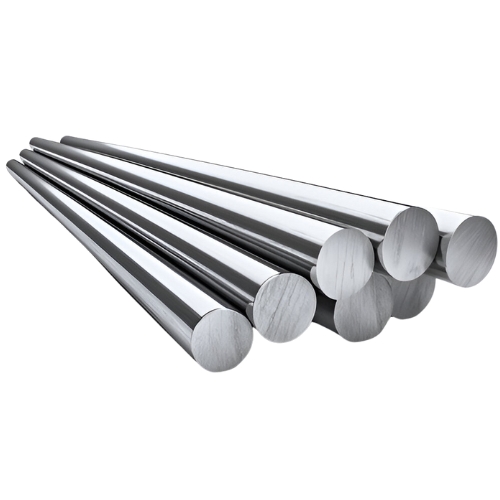
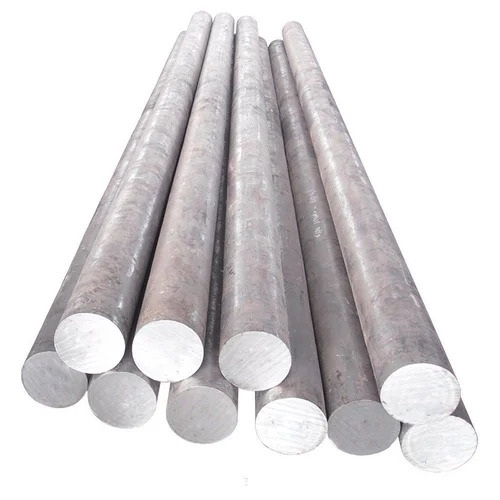
Stainless Steel 304, 304L, and 304H are the most widely used austenitic chromium–nickel stainless steels.
To start with, they deliver excellent corrosion resistance, formability, and broad industrial usability.
Additionally, they resist atmospheric corrosion, oxidation, and many aggressive chemical environments.
What sets them apart?Firstly, SS 304 is the standard all-purpose grade.
Secondly, SS 304L has lower carbon content — offering better weldability and resistance to intergranular corrosion.
Thirdly, SS 304H contains higher carbon — delivering enhanced strength and creep resistance at elevated temperatures.
As a result, these grades power industries worldwide — from food processing and architecture to chemical tanks and pressure vessels.
Moreover, they are trusted in piping systems, heat exchangers, and more.
Best of all, they offer a perfect balance of mechanical strength, fabrication ease, hygiene, and long service life — all at a cost-effective price.
Ready to source premium SS 304/304L/304H round bars?Get your quote now — share your grade preference, size, and quantity. We’ll respond within 24 hours.
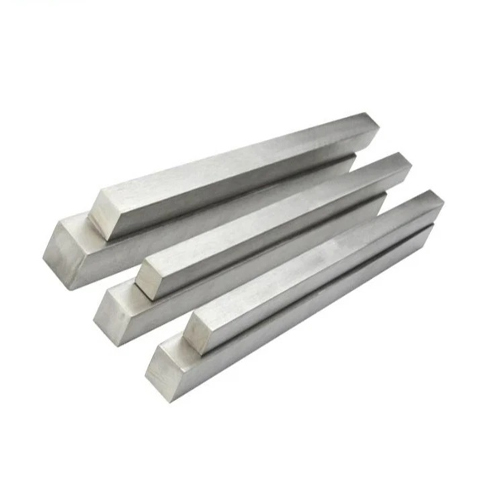
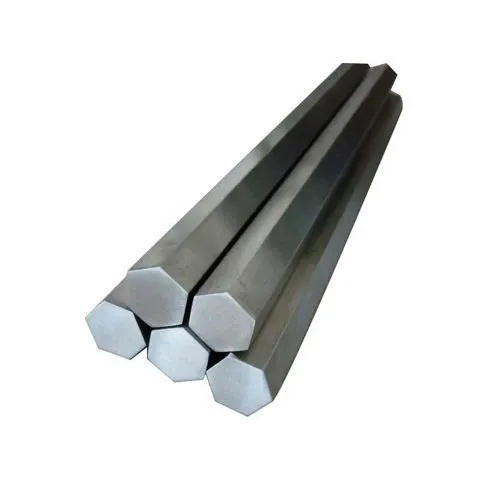
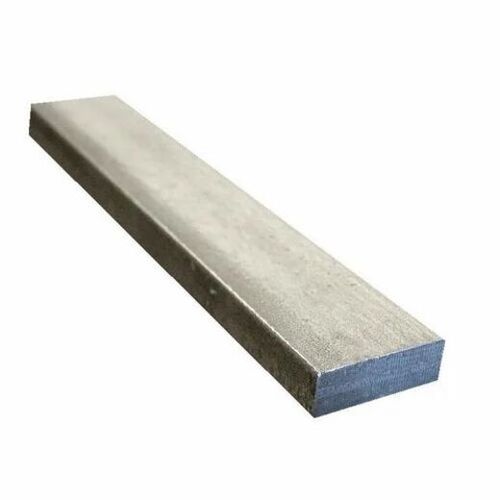
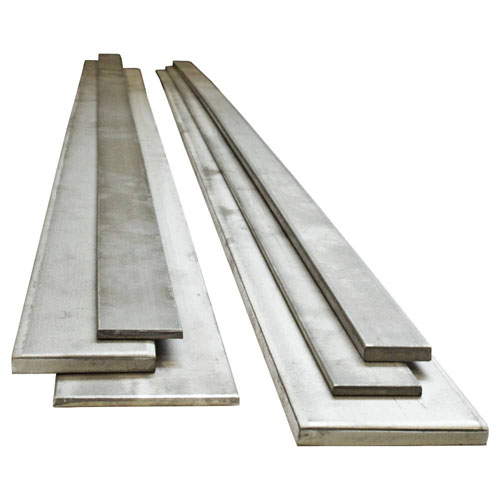
Other Types of Stainless Steel 304 / 304L / 304H Bars
CHEMICAL COMPOSITION OF STAINLESS STEEL 304/304L/304H ROUND BAR
Grade
C%
Mn%
Si%
P%
S%
Cr%
Ni%
N%
304
0.07 max
2.0 max
0.75 max
0.045 max
0.03 max
18.0 – 20.0
8.0 – 10.5
—
304L
0.03 max
2.0 max
0.75 max
0.045 max
0.03 max
18.0 – 20.0
8.0 – 12.0
0.10 max
304H
0.04 – 0.10
2.0 max
0.75 max
0.045 max
0.03 max
18.0 – 20.0
8.0 – 10.5
0.10 max
MECHANICAL PROPERTIES OF STAINLESS STEEL 304/304L/304H ROUND BAR
Grade
Tensile Strength (ksi)
Yield Strength 0.2% (ksi)
Elongation (%)
Hardness (Brinell) MAX
Hardness (Rockwell B) MAX
304
75 min
30 min
40
201
92
304L
70 min
25 min
40
201
92
304H
75 min
30 min
40
201
92
PHYSICAL PROPERTIES OF SS 304 / 304L ROUND BAR
Density (lb/in³)
Thermal Conductivity (BTU/h·ft·°F)
Electrical Resistivity (×10⁶)
Modulus of Elasticity (psi ×10⁶)
Coefficient of Thermal Expansion (×10⁶)
Specific Heat (BTU/lb·°F)
Melting Range (°F)
0.285 at 68°F
9.4 at 212°F 12.4 at 932°F
28.3 at 68°F 39.4 at 752°F 49.6 at 1652°F
28
9.4 (32–212°F) 10.2 (32–1000°F) 10.4 (32–1500°F)
0.1200 (68–212°F)
2500 – 2590
PHYSICAL PROPERTIES OF SS 304H ROUND BAR
Density (lb/in³)
Coefficient of Thermal Expansion
Thermal Conductivity (BTU/h·ft·°F)
Specific Heat (BTU/lb·°F)
Modulus of Elasticity (psi)
0.285 at 68°F
9.2 (68–212°F) 11.0 (68–1600°F)
9.4 at 212°F 12.4 at 932°F
0.12 (32–212°F)
29 × 10⁶ (E)
💡 Practical Difference in Use
Use Stainless Steel 304 Round Bars when: general-purpose corrosion resistance, good machinability, and cost-effective performance are required for shafts, fasteners, and machined components in normal industrial environments.
→ Example: shafts, bolts, nuts, couplings, pump parts, architectural fittings, and general engineering components.
Use Stainless Steel 304L Round Bars when: superior weldability and resistance to intergranular corrosion after welding are required in fabricated or welded bar components.
→ Example: welded shafts, structural supports, chemical equipment frames, pressure components, and fabricated assemblies.
Use Stainless Steel 304H Round Bars when: higher strength and improved creep resistance are required for continuous service at elevated temperatures in rotating or load-bearing parts.
→ Example: furnace components, heat exchanger rods, boiler supports, refinery fittings, and high-temperature mechanical parts.
To begin with, Stainless Steel 304, 304L, and 304H round bars are widely used for machining, fabrication, and structural applications.
Furthermore, they are preferred where corrosion resistance, mechanical strength, and dimensional stability are critical requirements.
Mechanical Engineering: Shafts, pins, rollers, bushings, and precision-machined parts.
Chemical & Process Equipment: Agitator shafts, pump components, fasteners, and structural supports.
Construction & Fabrication: Anchors, brackets, handrails, threaded rods, and support structures.
When to Choose Stainless Steel 304 vs. 304L vs. 304H Round Bars?
First and foremost, the selection mainly depends on machining requirements, welding needs, corrosion performance after fabrication, and operating temperature.
Consequently, choosing the right grade ensures optimal performance and cost efficiency.
Choose SS 304 Round Bars when:
General corrosion resistance is sufficient
Good machinability and surface finish are required
Minimal or no welding is involved
Cost-effective stainless steel is preferred
Used for shafts, fasteners, fittings, and machined components
Moderate temperature resistance is acceptable
Choose SS 304L Round Bars when:
Extensive welding or fabrication is required
Resistance to intergranular corrosion is critical
Post-weld heat treatment is not feasible
Used in welded shafts, frames, and pressure components
Better corrosion performance after welding is needed
Low carbon content is beneficial
Choose SS 304H Round Bars when:
High-temperature mechanical strength is critical
Improved creep resistance is required
Service involves continuous elevated temperatures
Used in furnace rods, boiler supports, refinery hardware
Higher carbon content is acceptable
Long-term thermal stability is essential
Industries That Use Stainless Steel 304 / 304L / 304H Round Bars
To begin with, these grades are widely used in industries where machining accuracy, corrosion resistance, mechanical strength, and long service life are essential.
Moreover, their versatility makes them suitable for a broad spectrum of applications — from general engineering to specialized high-temperature services.
Mechanical & Engineering Industry
Primary usage: precision-machined components.
Uses
Shafts, pins, bushings, rollers, threaded rods.
Why SS 304?
Excellent machinability, corrosion resistance, and durability.
Chemical & Process Industry
Primary usage: corrosion-resistant rotating and structural parts.
Excellent biocompatibility, corrosion resistance, and weldability for sterile environments.
Request a Quote
Looking for high-quality Stainless Steel 304 / 304L / 304H Round Bars & Rods? Our products are manufactured in compliance with ASTM A276, A479 and ASME SA276, SA479 standards. Get in touch with us today.