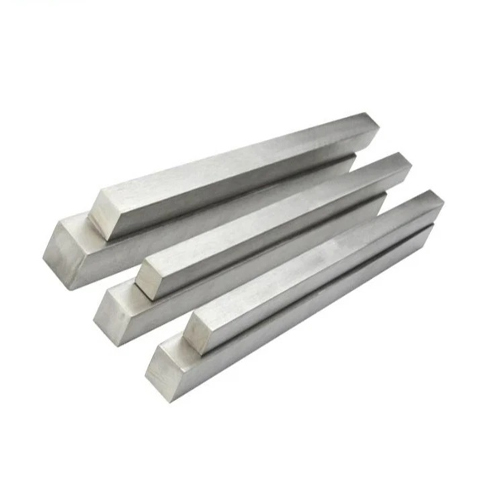
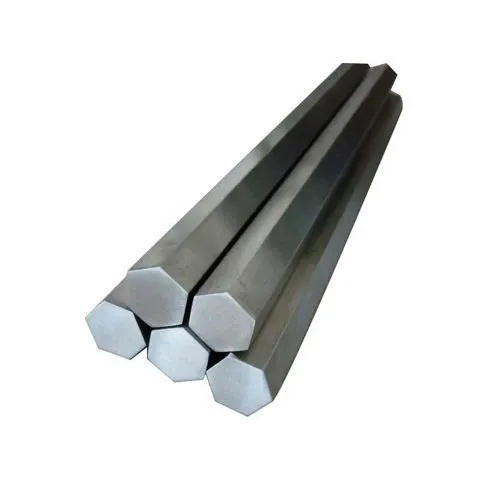
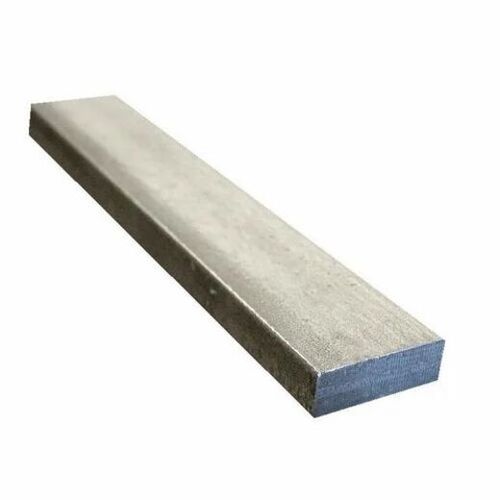
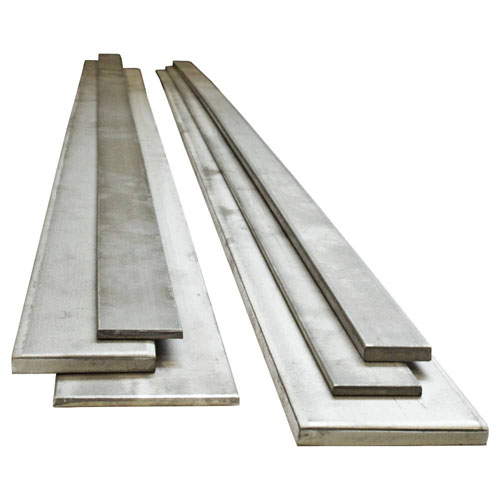
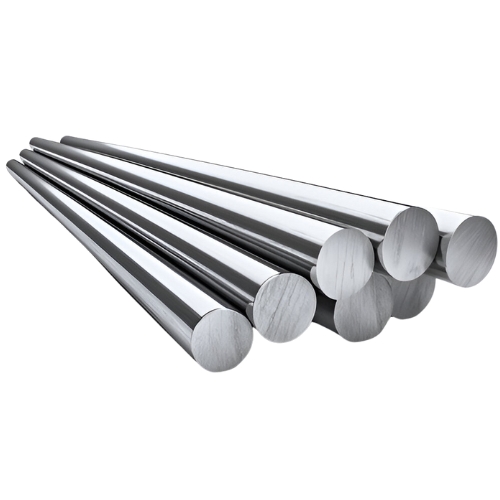
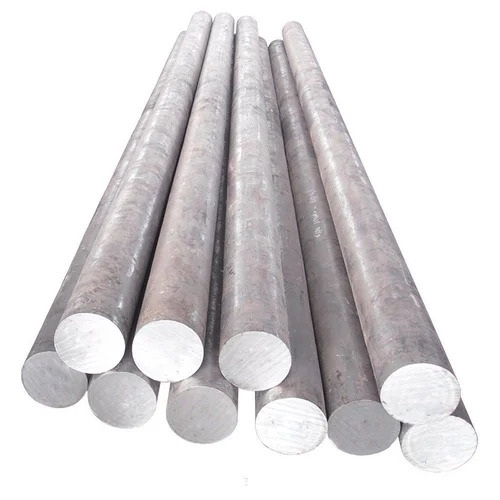
Stainless Steel 431 is a high-strength martensitic stainless steel known for its excellent toughness, superior corrosion resistance compared to standard martensitic grades, and outstanding mechanical performance after heat treatment. With higher chromium and nickel content, SS 431 delivers enhanced resistance to corrosion and oxidation while maintaining excellent hardenability. It is widely used in aerospace components, marine hardware, pump shafts, valve parts, fasteners, and heavy-duty mechanical equipment. Grade 431 offers an ideal balance of strength, durability, and corrosion resistance for demanding engineering and industrial applications.
CHEMICAL COMPOSITION OF STAINLESS STEEL 431 ROUND BAR
Grade
C %
Mn %
Si %
P %
S %
Cr %
Ni %
431
0.20 max
1.00 max
1.00 max
0.040 max
0.030 max
15.0 – 17.0
1.25 – 2.50
MECHANICAL PROPERTIES OF STAINLESS STEEL 431 ROUND BAR
Condition
Tensile Strength (MPa)
Yield Strength 0.2% (MPa)
Elongation (%)
Hardness (HB)
Impact Charpy V (J)
Annealed
850 – 900
650 – 700
20
≤ 285
—
204°C
1345
1055
20
388
50
316°C
1295
1035
19
375
53
427°C
1350
1080
19
388
—
538°C
1140
965
19
321
—
593°C
1015
770
20
293
64
650°C
960
695
20
277
84
PHYSICAL PROPERTIES OF STAINLESS STEEL 431 ROUND BAR
Property
Value
Unit
Density
7.75
g/cm³
Thermal Expansion
10.3
µm/m·°C
Thermal Conductivity
24.9
W/m·K
Modulus of Elasticity
200
GPa
Electrical Resistivity
0.60
µΩ·m
💡 Practical Difference in Use
Use Stainless Steel 431 Round Bars when: high mechanical strength, excellent toughness, good corrosion resistance, and wear resistance are required. SS 431 is a martensitic stainless steel containing higher chromium and nickel, offering superior strength compared to ferritic and standard martensitic grades. It can be heat treated to achieve very high hardness and tensile strength, making it suitable for demanding mechanical and load-bearing applications where durability and reliability are critical.
→ Example: pump shafts, marine hardware, valve components, aerospace fasteners, gears, spindles, turbine parts, high-stress bolts, and heavy-duty shafts.
Heat Treated / Bright Finished Stainless Steel 431 Round Bars when: tight dimensional accuracy, improved surface finish, enhanced wear resistance, and consistent mechanical properties are required for precision engineering components. Bright drawn or ground bars provide excellent straightness and surface smoothness, while heat treatment delivers superior hardness and fatigue resistance for high-performance applications.
→ Example: precision shafts, hydraulic components, CNC machined parts, bearing sleeves, aerospace fittings, high-load fasteners, and marine transmission parts.
Applications of Stainless Steel 431 Round Bars
Stainless Steel 431 round bars are widely used in marine, aerospace, power generation, heavy engineering, automotive, and oil & gas industries where high strength, toughness, corrosion resistance, and long service life are essential.
The selection mainly depends on strength requirements, operating stress, corrosion exposure, heat treatment capability, machining accuracy, and long-term durability expectations.
Choose SS 431 Round Bars when:
High tensile strength and toughness are required
Components are subjected to heavy loads and cyclic stress
Better corrosion resistance than standard martensitic grades is needed
Heat treatment is required to achieve specific hardness levels
Used in shafts, fasteners, gears, and mechanical drive systems
Long service life and fatigue resistance are critical
SS 431 Bright / Ground / Heat Treated Round Bars are preferred when:
Precise dimensional tolerance and straightness are required
Superior surface finish improves wear and friction performance
High-speed machining and CNC production are involved
Critical rotating or load-bearing components are manufactured
Consistent hardness and mechanical stability are essential
Used in aerospace, marine, hydraulic, and power equipment
Industries That Use Stainless Steel 431 Round Bars
SS 431 is preferred in industries where high mechanical strength, corrosion resistance, fatigue performance, and operational reliability are key requirements.
Marine & Offshore Industry
Used in corrosion-exposed rotating and load-bearing components.