

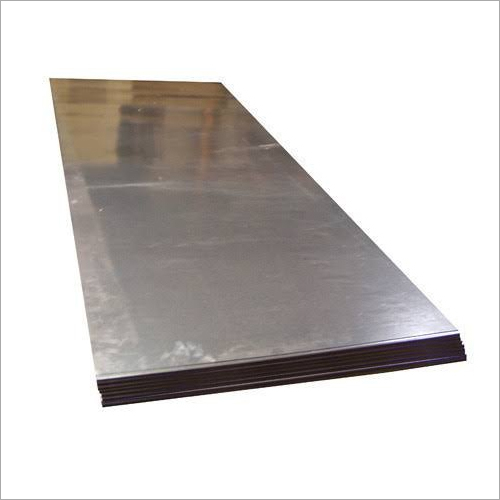
200/201 NICKEL SHEETS AND PLATES EQUIVALENT GRADES
| STANDARD | UNS | WNR. | JIS | EN |
|---|---|---|---|---|
| Nickel 200 | N02200 | 2.4066 | NW 2200 | Ni 99.2 |
| Nickel 201 | N02201 | 2.4068 | NW 2201 | LC-Ni 99 |
SPECIFICATION OF NICKEL 200/201 SHEETS AND PLATES
| Standard | ASTM B162 / ASME SB162 |
|---|---|
| Dimension Standard | JIS, AISI, ASTM, GB, DIN, EN, etc |
| Width | 1000mm, 1219mm, 1500mm, 1800mm, 2000mm, 2500mm, 3000mm, 3500mm, etc |
| Length | 2000mm, 2440mm, 3000mm, 5800mm, 6000mm, etc |
| Thickness | 0.3 mm to 120 mm |
| Form | Coils, Foils, Rolls, Plain Sheet, Shim Sheet, Perforated Sheet, Chequered Plate, Strip, Flats, Blank (Circle), Ring (Flange) etc. |
| Surface Finishing | Hot rolled plate (HR), Cold rolled sheet (CR), 2B, 2D, BA, NO.1, NO.4, NO.8, 8K, mirror, Chequered, embossed, hair line, sand blast, Brush, etching, SATIN (Met with Plastic Coated) etc. |
CHEMICAL COMPOSITION OF NICKEL 200/201 SHEETS AND PLATES
| Grade | C | Mn | Si | S | Cu | Fe | Ni |
|---|---|---|---|---|---|---|---|
| Nickel 200 | 0.15 max | 0.35 max | 0.35 max | 0.01 max | 0.25 max | 0.40 max | 99.0 min |
| Nickel 201 | 0.02 max | 0.35 max | 0.35 max | 0.01 max | 0.25 max | 0.40 max | 99.0 min |
MECHANICAL PROPERTIES OF NICKEL 200/201 SHEETS AND PLATES
| Grade | Density | Melting Point | Tensile Strength | Yield Strength (0.2% Offset) | Elongation |
|---|---|---|---|---|---|
| Nickel 200 | 8.9 g/cm3 | 1446 °C (2635 °F) | Psi – 67000 , MPa – 462 | Psi – 21500 , MPa – 148 | 45 % |
| Nickel 201 | 8.9 g/cm3 | 1446 °C (2635 °F) | Psi – 67000 , MPa – 462 | Psi – 21500 , MPa – 148 | 45 % |
The materials we supply undergo a comprehensive range of quality assurance procedures, including eddy current testing, hydrostatic testing, ultrasonic examination, and other essential NDT methods, along with detailed chemical and mechanical property evaluations. Each product is thoroughly inspected at multiple stages of manufacturing to ensure it is free from defects and suitable for demanding industrial applications. Our rigorous testing standards guarantee consistent quality and reliability. In addition, all products are manufactured in accordance with relevant industry norms and specifications, making them fully compliant and widely accepted in both domestic and international markets.
💡 Practical Difference in Use
Use Nickel 200 when: excellent corrosion resistance with good mechanical strength is required across a wide temperature range.
→ Example: chemical processing equipment, heat exchangers, food processing vessels.
Use Nickel 201 when: the application involves elevated temperatures where resistance to graphitization and intergranular embrittlement is critical. → Example: furnace parts, heat treatment baskets, high-temperature chemical reactors.
Applications of Nickel 200 & 201 Sheets and Plates
Nickel 200 and 201 are widely used in corrosive and high-temperature environments where purity, thermal stability, and resistance to chemical attack are essential.
- Chemical Processing Equipment: Both grades perform exceptionally well in handling caustic alkalis and aggressive chemicals.
- Heat Transfer Applications: Ideal for heat exchangers and condensers due to excellent thermal conductivity.
- High-Purity and Food Handling: Both grades are suitable for contamination-free processing environments.
When to Choose Nickel 200 vs. Nickel 201?
The selection depends mainly on operating temperature, carbon sensitivity, and long-term service requirements.
Choose Nickel 200 when:
- General corrosion resistance is sufficient
- Operating temperatures are below critical graphitization range
- Good mechanical properties at ambient and moderate temperatures are required
- Excellent resistance to caustic alkalis is needed
- High electrical and thermal conductivity is important
- Cost-effective commercially pure nickel is preferred
Choose Nickel 201 when:
- Service involves high operating temperatures
- Low carbon content is critical to prevent embrittlement
- Superior resistance to graphitization is required
- Long-term thermal stability is essential
- Used in furnace and high-temperature chemical systems
- Higher reliability under heat exposure is required
Industries That Use Nickel 200 & 201 Sheets and Plates
Nickel 200 and 201 sheets and plates are essential across industries where corrosion resistance, purity, and thermal stability are critical.
Primary application sector due to outstanding resistance to caustic environments.
Uses
Reactors, evaporators, storage tanks, and piping systems for caustic soda and chemicals.
Why Nickel?
Provides excellent resistance to alkalis and maintains structural integrity under corrosive attack.
Extensively used for components exposed to high temperatures.
Uses
Furnace linings, heat treatment baskets, trays, and retorts.
Why Nickel?
Nickel 201 resists embrittlement and graphitization at elevated temperatures.
Suitable for hygienic and contamination-free processing.
Uses
Food processing vessels, pharmaceutical reactors, and clean handling equipment.
Why Nickel?
High purity and corrosion resistance ensure product safety and hygiene compliance.
Used in heat-critical and electrical applications.
Uses
Heat exchangers, condenser plates, and electrical resistance components.
Why Nickel?
Excellent thermal conductivity and oxidation resistance under aggressive conditions.
Used in corrosive seawater and offshore processing environments.
Uses
Seawater handling components, desalination systems, and offshore processing equipment.
Why Nickel?
Exceptional resistance to seawater corrosion and chemical attack.
Valued for high conductivity and stability.
Uses
Electrical contacts, battery components, and resistance wires.
Why Nickel?
Provides stable electrical performance and long service life.
Used in precision and heat-resistant components.
Uses
Thermal shields, heat-resistant panels, and chemical handling systems.
Why Nickel?
Maintains strength and corrosion resistance under extreme thermal and environmental conditions.
Essential for hydrogen and caustic service environments.
Uses
Hydrogen processing equipment, caustic soda evaporators, and alkali storage vessels.
Why Nickel?
Outstanding resistance to hydrogen embrittlement and caustic corrosion.
Request a Quote
Looking for high-quality Nickel 200 / 201 Sheets & Plates? Get in touch with us today.
Contact Us