
High Quality 12-14% and Hadfield Manganese Sheets & Plates
Formable • Ductile • Machinable
Get a Quote
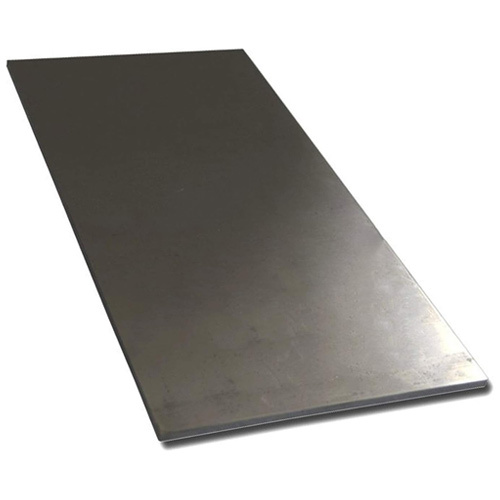
MANGANESE STEEL PLATE EQUIVALENT GRADES
| STANDRADS | EURONORM | DIN | ASTM | AFNOR | IS:2000 | IS:1993 | BS |
|---|---|---|---|---|---|---|---|
| GRADES | X120Mn13 | 1.3401 | A128 GR B2 / A128M | X120Mn13 | 276 | 2708 | 3100 |
Manganese Steel Plates Specifications
| Thickness | 6mm to 100mm |
|---|---|
| Width | 1,500mm to 2,500mm |
| Length | 6,000mm to 12,000mm |
| Production | Hot-Rolled (HR) / Cold-Rolled (CR) |
| Heat Treatment | N, Q+T |
| Surface Paint | EP, PE, HDP, SMP, PVDF |
The materials we supply undergo a comprehensive range of quality assurance procedures, including eddy current testing, hydrostatic testing, ultrasonic examination, and other essential NDT methods, along with detailed chemical and mechanical property evaluations. Each product is thoroughly inspected at multiple stages of manufacturing to ensure it is free from defects and suitable for demanding industrial applications. Our rigorous testing standards guarantee consistent quality and reliability. In addition, all products are manufactured in accordance with relevant industry norms and specifications, making them fully compliant and widely accepted in both domestic and international markets.
12-14% Manganese Steel
Equivalent Grades
- EURONORM: X120Mn13
- DIN: 1.3401
- ASTM: A128 GR B2 / A128M
- AFNOR: X120Mn13
Specifications
- Thickness: 6mm to 100mm
- Width: 1,500mm to 2,500mm
- Length: 6,000mm to 12,000mm
- Production: Hot-Rolled (HR) / Cold-Rolled (CR)
- Heat Treatment: N, Q+T
- Surface Paint: EP, PE, HDP, SMP, PVDF
Chemical Composition
- Carbon (C): 1.13%
- Silicon (Si): 0.40%
- Manganese (Mn): 11.00-14.00%
- Phosphorus (P): ≤0.020%
- Sulfur (S): 0.003%
Mechanical Properties
- Hardness Brinell: 200 HB
- Hardness Range: 180-220 HB
- Tensile Strength: 880 MPa
- Yield Strength: 320 MPa
- Elongation: 40%
- Impact Toughness: 80-100 J at 20°C
- Work Hardening Capacity: Up to 500 HB
Physical Properties
- Density: 7.88 g/cm³
- Expansion Coefficient: 21.5×10⁻⁶/°C
- Specific Heat: 502 J/kg°C
- Electrical Resistivity: 75 μΩ.m
- Thermal Conductivity: 13 W/m°C
- Magnetic Permeability: ≈1.002
- Melting Point: 1350-1400°C
Hadfield Manganese Steel
Equivalent Grades
- EURONORM: X120Mn13
- DIN: 1.3401
- ASTM: A128 GR B2 / A128M
- AFNOR: X120Mn13
Specifications
- Thickness: 6mm to 100mm
- Width: 1,500mm to 2,500mm
- Length: 6,000mm to 12,000mm
- Production: Hot-Rolled (HR) / Cold-Rolled (CR)
- Heat Treatment: N, Q+T
- Surface Paint: EP, PE, HDP, SMP, PVDF
Chemical Composition
- Carbon (C): 1.13%
- Silicon (Si): 0.40%
- Manganese (Mn): 11.00-14.00%
- Phosphorus (P): ≤0.020%
- Sulfur (S): 0.003%
Mechanical Properties
- Hardness Brinell: 220 HB
- Hardness Range: 180-245 HB
- Tensile Strength: 940 MPa
- Yield Strength: 380 MPa
- Elongation: 40%
- Impact Toughness: ≥112 J at 20°C
- Work Hardening Capacity: Up to 550 HB
Physical Properties
- Density: 7.88 g/cm³
- Expansion Coefficient: 21.5×10⁻⁶/°C
- Specific Heat: 502 J/kg°C
- Electrical Resistivity: 75 μΩ.m
- Thermal Conductivity: 13 W/m°C
- Magnetic Permeability: ≈1.002
- Melting Point: 1350-1400°C
💡 Practical Difference in Use
Use 12-14% Manganese Steel when: standard work-hardening steel with excellent impact resistance is needed for general wear applications.
→ Example: crusher liners, mining equipment, railway points.
Use Hadfield Manganese Steel when: superior work-hardening capability and maximum impact toughness are required for severe service conditions. → Example: rock crusher jaws, cone crusher mantles, heavy-duty excavator teeth.
Applications of 12-14% & Hadfield Manganese Steel Plates
These manganese steel plates serve critical roles in industries where extreme impact and wear resistance are required through work-hardening properties.
- Crushing and Mining Applications: Both grades excel in equipment that subjects the material to repeated impact and compression forces.
- Material Processing Equipment: Ideal for components that work-harden under service conditions to develop extreme surface hardness.
- Heavy Impact Environments: Both materials demonstrate exceptional toughness and ability to withstand severe mechanical shocks.
When to Choose 12-14% vs. Hadfield Manganese Steel?
This decision depends on the severity of impact, required work-hardening response, and specific application demands.
Choose 12-14% Manganese Steel when:
- Standard work-hardening performance is sufficient
- Good impact resistance at reasonable cost is needed
- General crushing and wear applications
- Applications involve moderate to heavy impact
- Initial hardness of 200-250 HB is acceptable
- Non-magnetic properties are required
Choose Hadfield Manganese Steel when:
- Maximum work-hardening capability is critical
- Superior impact toughness is required
- Applications involve severe impact and abrasion
- Highest possible service life is needed
- Work-hardening up to 550 HB is required
- Proven historical performance is important
Industries That Use 12-14% & Hadfield Manganese Steel Plates
These manganese steel plates are essential in industries where components must withstand extreme impact and develop hardness through work-hardening during service.
Primary application area for both manganese steel grades due to extreme wear conditions.
Uses
Jaw crusher plates, cone crusher mantles, impact crusher liners, shovel teeth, and bucket liners.
Why Manganese Steel?
Work-hardens under impact from rocks and ores, developing extreme surface hardness while maintaining tough core.
Critical for railway infrastructure subjected to heavy impact loads.
Uses
Railway crossings, frogs, switch points, and buffer plates in rail systems.
Why Manganese Steel?
Withstands repeated impact from train wheels while work-hardening to resist deformation and wear.
Essential for equipment handling concrete, rocks, and demolition materials.
Uses
Concrete mixer blades, demolition tool tips, rock breaker parts, and heavy equipment components.
Why Manganese Steel?
Resists impact from reinforced concrete and demolition debris while maintaining structural integrity.
Widely used in processing raw materials and finished products.
Uses
Hammer mill hammers, crusher rolls, pulverizer rings, and raw mill liners.
Why Manganese Steel?
Excellent resistance to impact abrasion from limestone, clinker, and other cement raw materials.
Critical for equipment handling metal scrap and recycled materials.
Uses
Scrap shear blades, shredder hammers, baler liners, and metal processing equipment.
Why Manganese Steel?
Withstands extreme impact from metal scrap while resisting cracking and failure.
Used in equipment handling abrasive materials in marine environments.
Uses
Dredge cutter heads, pump impellers, suction pipe liners, and underwater excavation tools.
Why Manganese Steel?
Resists combined wear from sand, gravel, and water while maintaining corrosion resistance.
Used in various processing equipment within metal production facilities.
Uses
Skull cracker balls, furnace components, hot metal handling equipment, and mill guides.
Why Manganese Steel?
Withstands thermal shocks and mechanical impacts in high-temperature metal processing.
Essential for ground-engaging tools in heavy excavation work.
Uses
Excavator teeth, bulldozer cutting edges, ripper tips, and loader bucket components.
Why Manganese Steel?
Work-hardens when digging through rocky soil, developing wear-resistant surfaces while maintaining toughness.
Frequently Asked Questions About 12–14% & Hadfield Manganese Sheets & Plates
What are 12–14% & Hadfield Manganese Steel Sheets & Plates?
12–14% Hadfield Manganese Steel Sheets & Plates, also known as High Manganese Steel Plates, are wear-resistant steel products containing approximately 12–14% manganese. They are well known for their outstanding work-hardening ability, exceptional impact toughness, and superior abrasion resistance. These plates are widely used in mining, quarrying, cement plants, steel plants, railways, and heavy engineering industries where components are subjected to severe wear and impact.
What is the difference between 12–14% Manganese Steel and Hadfield Steel?
There is virtually no difference. Hadfield Steel is the original name for high-manganese steel developed by Sir Robert Hadfield. Modern 12–14% Manganese Steel Plates are based on the same metallurgy and offer excellent work-hardening characteristics, making them ideal for high-impact and abrasive applications.
What are the advantages of 12–14% Hadfield Manganese Steel Plates?
- Exceptional Work Hardening: Surface hardness increases under continuous impact.
- Excellent Abrasion Resistance: Performs exceptionally well in high-wear environments.
- Superior Impact Strength: Withstands repeated heavy impact without cracking.
- Long Service Life: Reduces maintenance and replacement costs.
- Excellent Toughness: Suitable for severe industrial conditions.
What are the common applications of Hadfield Manganese Steel Sheets & Plates?
- Crusher jaw plates and cone crusher liners
- Impact hammers and blow bars
- Bucket liners and excavator wear parts
- Railway crossings and track components
- Chute liners and hopper liners
- Cement plant wear components
- Quarry and mining equipment
Which standards do High Manganese Steel Plates conform to?
At Ratnadeep Steel & Engg. Co., our 12–14% Hadfield Manganese Steel Sheets & Plates are supplied in accordance with internationally accepted specifications wherever applicable. For technical information regarding material specifications and testing methods, refer to ASTM International and ASM International.
Why are Hadfield Manganese Plates preferred for mining and quarrying?
Mining and quarrying equipment operates under continuous impact and severe abrasion. Hadfield Manganese Steel Plates develop increased surface hardness during service while maintaining a tough core, resulting in outstanding wear resistance and significantly longer equipment life.
What sizes and specifications are available?
Ratnadeep Steel supplies 12–14% Hadfield Manganese Steel Sheets & Plates in a wide range of:
- Thickness: As per customer requirement
- Width: Standard and customized widths
- Length: Standard mill lengths and cut-to-size
- Finish: Hot Rolled
- Processing: Plasma cutting, flame cutting and custom fabrication available
Which industries use 12–14% Hadfield Manganese Steel Sheets & Plates?
- Mining & Quarrying Industry
- Cement Plants
- Steel Plants
- Construction & Earthmoving Equipment
- Railways
- Material Handling Systems
- Power Generation Industry
- Heavy Engineering & Industrial Fabrication
Do you supply custom-cut Hadfield Manganese Steel Plates?
Yes. Ratnadeep Steel & Engg. Co. supplies custom-cut 12–14% Hadfield Manganese Steel Sheets & Plates in various thicknesses, widths, and lengths. Value-added services such as profile cutting, flame cutting, plasma cutting, machining, and fabrication are also available to meet specific project requirements.
Why choose Ratnadeep Steel for High Manganese Steel Sheets & Plates?
Ratnadeep Steel is a trusted manufacturer, exporter, and supplier of 12–14% Hadfield Manganese Steel Sheets & Plates in India. We offer premium-quality materials, competitive pricing, strict quality inspection, custom sizes, prompt delivery, and technical support for mining, cement, steel, railway, construction, and heavy engineering industries worldwide.
Request a Quote
Looking for high-quality 12-14% Manganese and Hadfield Steel Sheets & Plates? Our products are manufactured in compliance with ASTM A128 standards. Get in touch with us today.
Contact Us